What Should a Loan Officer Website Include?
A useful loan officer website should help a visitor understand who the loan officer is, where they work, which financing topics they cover, and how to take an appropriate next step. It should also give the loan officer a practical way to keep business information and content current.
Use this checklist to plan a new website or review an existing one. The exact content, disclosures, and tools should match the loan officer's business, licenses, company requirements, and approved processes.
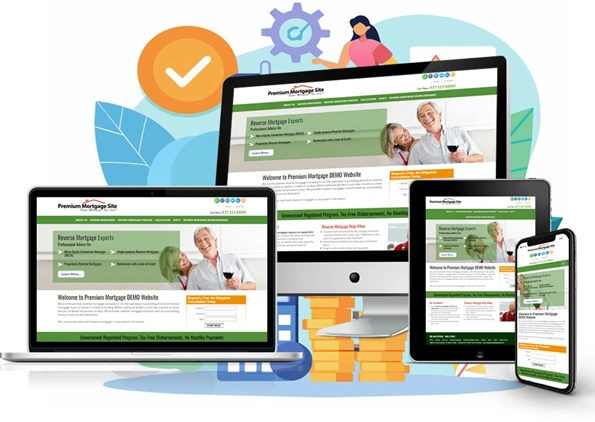
The Essential Website Layers
Identity and Credibility
Make the loan officer's name, role, company relationship, contact information, licensing details, service area, and professional background clear and easy to verify.
Useful Mortgage Information
Organize approved program information, process explanations, calculators, common questions, and educational resources around the visitors the loan officer serves.
Clear Next Steps
Provide visible, understandable paths to contact, request information, schedule a conversation, or continue to an approved application or third-party system.
Loan Officer Website Checklist
- Clear identity: Full professional name, current title, company name, photo, biography, and accurate contact information.
- Licensing and company information: NMLS identifiers, applicable state or company details, and required disclosures placed according to the organization's approved requirements.
- Defined audience and market: Plain-language explanation of the people, property types, financing categories, and geographic areas the loan officer currently serves.
- Relevant program pages: Approved information for the loan products or financing topics the loan officer actually handles, with content reviewed for accuracy and currency.
- Process education: Helpful explanations of inquiry, prequalification, application, document, and closing stages without implying approval, eligibility, rates, or outcomes.
- Calculators and interactive tools: Clearly labeled tools with appropriate assumptions and disclaimers. Calculators should be educational and should not be presented as a commitment or approval.
- Contact and inquiry paths: Phone, email, forms, scheduling, and approved application links that make the next step clear and route information to the intended system.
- Trust evidence: Current professional credentials, company context, permission-based testimonials or reviews, and other verifiable information presented without unsupported outcome claims.
- Privacy and consent context: Accessible privacy information and form language appropriate to the data collected and the systems receiving it.
- Mobile usability and accessibility: Readable text, usable menus, visible labels, tap-friendly controls, useful alternative text, and forms that work on common mobile screens.
- Measurement: Approved analytics and conversion events that distinguish page visits from completed inquiries or other genuine outcomes.
- Ongoing ownership: A named person or process for reviewing program content, contact details, licenses, links, disclosures, tools, forms, and third-party settings.
Pages Commonly Needed
A practical loan officer website often includes a homepage, about/profile page, contact page, relevant loan-program or service pages, educational resources, calculator or tool pages, privacy information, and clear inquiry or application paths. A blog can help when the loan officer has a sustainable review and publishing process; an abandoned or generic blog is not automatically useful.
More pages are not inherently better. Each page should have a defined audience and purpose, accurate approved content, and a useful place in the site's navigation or internal-link structure.
Separate Website Forms From Loan Applications
A contact form, consultation request, prequalification questionnaire, secure document tool, and full loan application serve different purposes. Label each path accurately and explain what happens next. If the website hands off to a point-of-sale, CRM, scheduling, or application system, confirm the destination and data flow before publication.
Content the Loan Officer Must Review
The loan officer and its organization remain responsible for reviewing and approving business information, licensing details, program descriptions, disclosures, privacy choices, testimonials, rates or market references, and other public content. A website platform can provide structure and tools, but it does not originate loans, evaluate borrowers, determine eligibility, or provide compliance advice.
Common Gaps to Fix
- A generic homepage that does not identify the loan officer, audience, company, or next step.
- Outdated titles, phone numbers, licensing details, program claims, links, or team information.
- Several competing buttons with no explanation of which visitor should use each one.
- Copied or thin program pages that add no useful local, professional, or process context.
- Forms that collect information without clear labels, privacy context, ownership, or tested delivery.
- Unsupported claims about compliance, approval, rankings, lead volume, closing speed, or financial outcomes.
- Mobile menus, tables, embedded tools, or form controls that overflow or cannot be used reliably.
Build From a Mortgage-Focused Starting Point
iReadySites provides hosted mortgage website templates, supported content structures, forms, calculators, website-management tools, and plan-based features. Review the available template and plan against this checklist, then confirm the exact workflow in a guided demo.