How SBA loans work: A guide for business owners
Small Business Administration (SBA) loans are designed to help small businesses access affordable financing. While the process is more structured than a conventional loan, the benefits often include lower down payments, longer repayment terms, and competitive interest rates.
See if you pre-qualify
What is an SBA loan?
An SBA loan is not issued directly by the government. Instead, approved lenders provide the funds, and the U.S. Small Business Administration guarantees a portion of the loan. This guarantee reduces risk for lenders and makes it easier for small businesses to qualify.
Common SBA loan programs include:
- 7(a) loans for general business purposes
- 504 loans for real estate and large equipment
- Microloans for smaller funding needs
Step 1: Determine Eligibility
Before applying, you must confirm that your business meets basic SBA requirements.
Most SBA lenders look for:
- A for-profit business operating in the United States
- Strong personal credit history
- Demonstrated ability to repay
- Reasonable owner equity investment
- No recent defaults on government debt
Lenders will also evaluate time in business, annual revenue, industry risk, and existing debt obligations.
Step 2: Choose the Right SBA Loan Program
Not all SBA loans are the same. Selecting the correct program depends on your funding purpose.
SBA 7(a) Loan
Best for working capital, refinancing debt, buying equipment, or acquiring a business.
SBA 504 Loan
Ideal for purchasing commercial real estate or large fixed assets.
SBA Microloan
Designed for startups or small funding amounts.
A qualified lender will guide you toward the most appropriate option based on your business profile and loan purpose.
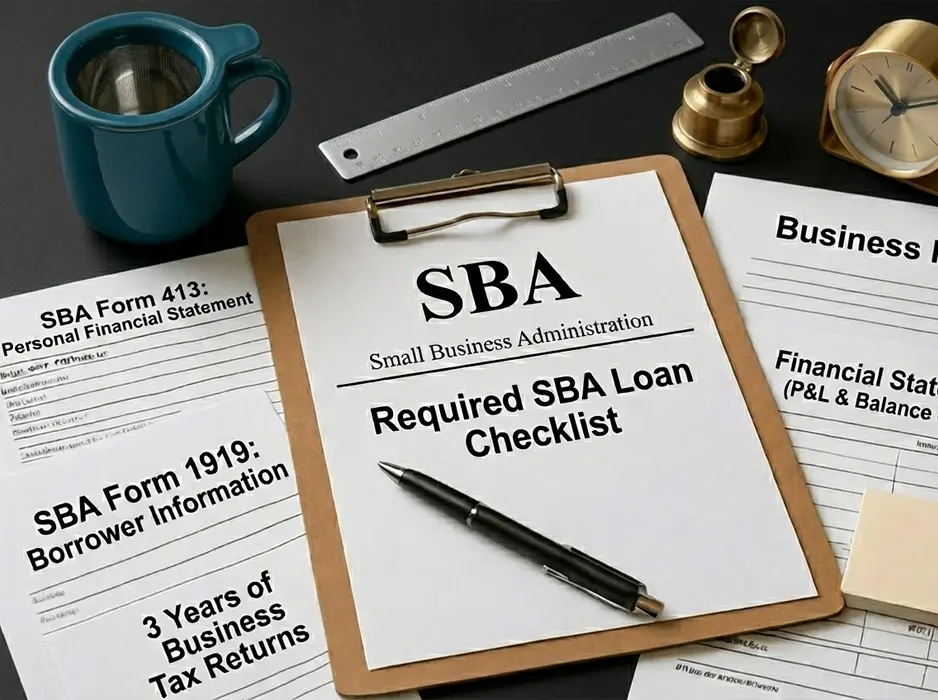
Step 3: Gather Required Documentation
SBA loans require thorough documentation. Preparation is critical.
Common documents include:
- Business financial statements
- Personal financial statement
- Business tax returns (2 to 3 years)
- Personal tax returns
- Business plan
- Debt schedule
- Bank statements
- Legal documents (licenses, leases, articles of incorporation)
Being organized speeds up underwriting and reduces delays.
Step 4: Submit the Application
Once documentation is complete, you will submit your formal application through an SBA-approved lender.
The lender will:
- Review your credit profile
- Analyze cash flow and debt coverage
- Evaluate collateral
- Assess management experience
- Confirm eligibility under SBA guidelines
This stage may involve follow-up questions or requests for additional documentation.

Step 5: Underwriting and SBA Review
After initial lender approval, the file may go through an SBA review process, depending on whether the lender has delegated authority.
During underwriting, lenders calculate:
- Debt Service Coverage Ratio (DSCR)
- Loan-to-Value (LTV) ratio
- Global cash flow
- Risk classification
The SBA guarantee is structured during this stage. Approval timelines vary but typically range from several weeks to a few months.

Step 6: Loan Approval and Commitment Letter
If approved, you will receive a commitment letter outlining:
- Loan amount
- Interest rate
- Term length
- Collateral requirements
- Guarantee percentage
- Fees and closing costs
Carefully review the terms before signing. You may ask questions or request clarification from your lender.

Step 7: Closing and Funding
After signing the commitment, the loan enters the closing phase.
This includes:
- Final documentation
- Collateral filings
- Insurance verification
- Payment of required fees
- Legal review (if applicable)
Once all conditions are satisfied, funds are disbursed. Depending on the loan type, funds may be released in a lump sum or in stages.
We match you with financing built for your business
Check your pre qualification in minutes with zero impact to your credit score.
See if you pre-qualifyWhat to expect after funding
SBA loans are structured for long-term repayment. After funding:
- Monthly payments begin according to the agreed schedule
- Financial reporting may be required annually
- Insurance and compliance must be maintained
- Funds must be used strictly for approved purposes
Maintaining proper records and staying in communication with your lender helps ensure a smooth repayment experience.
Typical SBA loan timeline
While timelines vary, a general expectation is:
- Prequalification: 1 to 2 weeks
- Application and documentation: 2 to 4 weeks
- Underwriting and SBA review: 3 to 6 weeks
- Closing and funding: 2 to 4 weeks
Total time: Approximately 60 to 90 days.
The SBA loan process requires preparation and patience, but the structure is designed to support sustainable small business growth. By understanding each step in advance, you can approach the application process with confidence and improve your chances of approval.
If you are considering an SBA loan, consult with an experienced SBA lender who can guide you through eligibility, documentation, underwriting, and closing.
No-obligation free consultation


